



By Dr. William D. Gibson
President & CEO, Boys & Girls Clubs of the Greater Triad
(w.gibson@bgctriad.org)
February was a good month at the Boys & Girls Clubs of the Greater Triad.
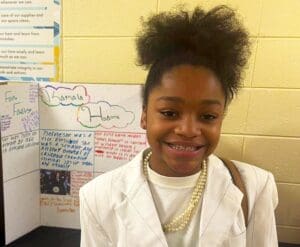
Our Clubs came alive with the kind of energy that only happens when young people start connecting with something bigger than themselves. We celebrated Black History Month the way it deserves to be celebrated—not as an obligation, not only as a decorative bulletin board, but as a genuine, intentional act of honoring the brilliance, sacrifice, and resilience that have shaped this nation. Our Club kids learned about inventors, activists, artists, athletes, scientists, and leaders—people who were systematically told “no” and found the courage and creativity to build their own “yes.” They heard stories of people who looked like them, all of whom, despite barriers, still managed to change the world.
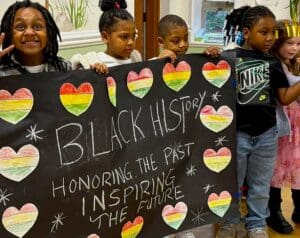 And in those moments, something powerful happened. Our kids didn’t just learn history. They saw possibility.
But as meaningful as February was, I’ve been sitting with a question: What happens next?
Because celebration without action is just nostalgia. And the children we serve—the Club kids of High Point, Asheboro, and the surrounding communities we’re working to reach—deserve more than a month. They deserve a life of opportunity. That’s not a slogan. That’s a commitment. And it’s the heart of what we’re building with Future Ready Triad.
The Gap Between Inspiration and Access
 Here in the Greater Triad, we know the data. We live it every day. Too many of our young people—disproportionately Black and Brown—are growing up in neighborhoods where poverty is concentrated, schools are under-resourced, and the pipeline from classroom to career feels more like a long shot than a clear path. The same systemic barriers that the trailblazers of Black history spent their lives fighting are still showing up in our communities, often in quieter but no less damaging ways.
When a child learns in February that Mae Jemison became the first Black woman to travel in space, that moment should ignite something in them. But inspiration has a shelf life if it isn’t met with infrastructure. We can celebrate genius all we want, but if that child doesn’t have access to STEM programming, a mentor who looks like them, a safe, structured after-school space, and a community that invests in their potential, that spark can go dark. That’s the gap we are here to close.
Future Ready Triad: Turning Celebration Into Architecture
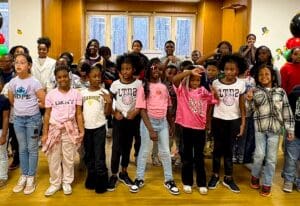
The Future Ready Triad initiative isn’t just a growth strategy. It’s a declaration of what we believe every child in this region deserves—and a concrete plan to deliver it. Our vision is bold by design: growing to 25–30 Clubs serving 9,000+ young people across High Point, Greensboro, Winston-Salem, and communities stretching from Asheboro to Burlington, Thomasville to Reidsville, and beyond (ten cities/towns and four counties, in all). We are building not just more Clubs, but better ones—anchored in academic excellence, career readiness, leadership development, athletic engagement, and mental health support.
This is what Boys & Girls Clubs of America’s Better, Bigger, Bolder framework calls us to do. Better means every program we offer is high-quality, trauma-informed, and tied to measurable outcomes. Bigger means reaching thousands more young people who currently have no access to the kind of safe, structured after-school environment that changes life trajectories. Bolder means we lead collective impact—partnering with Guilford County Schools, Asheboro City Schools, Winston-Salem/Forsyth County Schools, shift_ed, Beyond Sports NC, Carolina Core MLS Next, College Pathways of the Triad, Ready Ready, GO FAR, and others—because no single organization can move a system alone. It takes a village.
Every pillar of Future Ready Triad is, at its core, a response to the same question Black History Month forces us to ask: What would have happened if those trailblazers had been given more? More access. More investment. More people in their corner.
We don’t have to wonder what happens when young people are given the right support at the right time. We see it in our Clubs every day.
 The Work Is Now
Black History Month is a reminder. Our efforts—together—are the response.
It’s the response to a child who has never seen someone who looks like them in a leadership role—until they walk into one of our Clubs and find exactly that. It’s the response to a teenager who is academically capable but doesn’t know how to navigate college applications, financial aid, or career pathways—until our Future Ready programming shows them the way. It’s the response to a community that has celebrated its history but hasn’t always done the hard, sustained work of building the infrastructure those stories deserve.
We are doing that work. And we’re asking the Greater Triad to do it with us.
Because here’s what I know after 26 years in the work of positive social change: the next Mae Jemison, the next John Lewis, the next Shirley Chisholm—they might be sitting in one of our Clubs right now. Their story is still being written. What they need from us isn’t just a celebration. They need a champion. They need a pathway. They need a community that says, without hesitation, you belong here, and we are going to invest in what you become.
That’s the promise of Future Ready Triad. That’s the work of every month, not just February.